WEEK 1:
Discussion Points:
1. Understanding Trends
- What is a “trend” in VFX?
- How can we tell when a trend is emerging?
- Do trends appear suddenly, or do they evolve from earlier technologies, techniques, styles, or workflows?
2. Identifying Current Trends
- What are some of the latest VFX trends? Consider films, TV shows, video games, or other media.
- How do we know when a technique or style is becoming a trend? Is it popularity, innovation, audience response, or something else?
- Comparing current trends with past developments can show how ideas evolve.
3. Sharing Examples
- Share specific examples of current VFX trends on your digital sketchbook.
- Look for instances where cutting-edge techniques are used.
Current trends include ai integration to automate tasks, Gpu are being built with real time rendering. In terms of aesthetics there is a heavy desire to seek better lighting and photo realism, companies like Nvidia are improving technologies for path tracing and ray tracing and developing dlss 5. technology like photogrammetry lets you have almost 1 to 1 copies of actors within games and creates highly detailed and accurate models.
I think something is coming into trend once we see more and more studios seeking to develop the techniques, something like deaging, lots of Hollywood use it to keep continuity with later of previous instalments of movies or series. 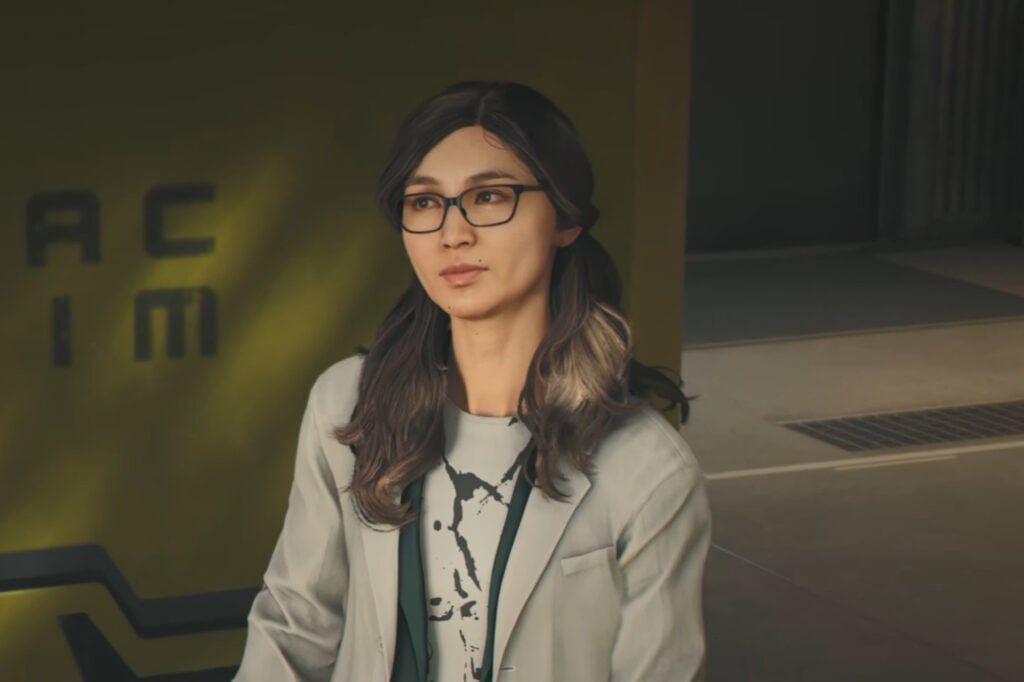


 Reflection (100 words)
How do Edgerton’s techniques map onto modern VFX (time, motion, light, narrative effect)?
- Explore how Edgerton’s techniques continue to influence filmmakers and VFX artists in capturing and manipulating time and motion to create stunning visual experiences.
Edgerton developed strobe light techniques and use high speed picture cameras to create freeze frame like images that ordinarily would not be possible to be seen in a single photo for people. It has led the industry to be able to capture scenes in extremely slow motion especially compared to what was capable before. In todays age of vfx we are not limited to just using cameras we are also able to use cgi and computer tools to create the same effects. an example of that would be quicksilvers,
Find four VFX shots (film, TV, ads, games — e.g., Matrix bullet time) that visually echo Edgerton’s images.
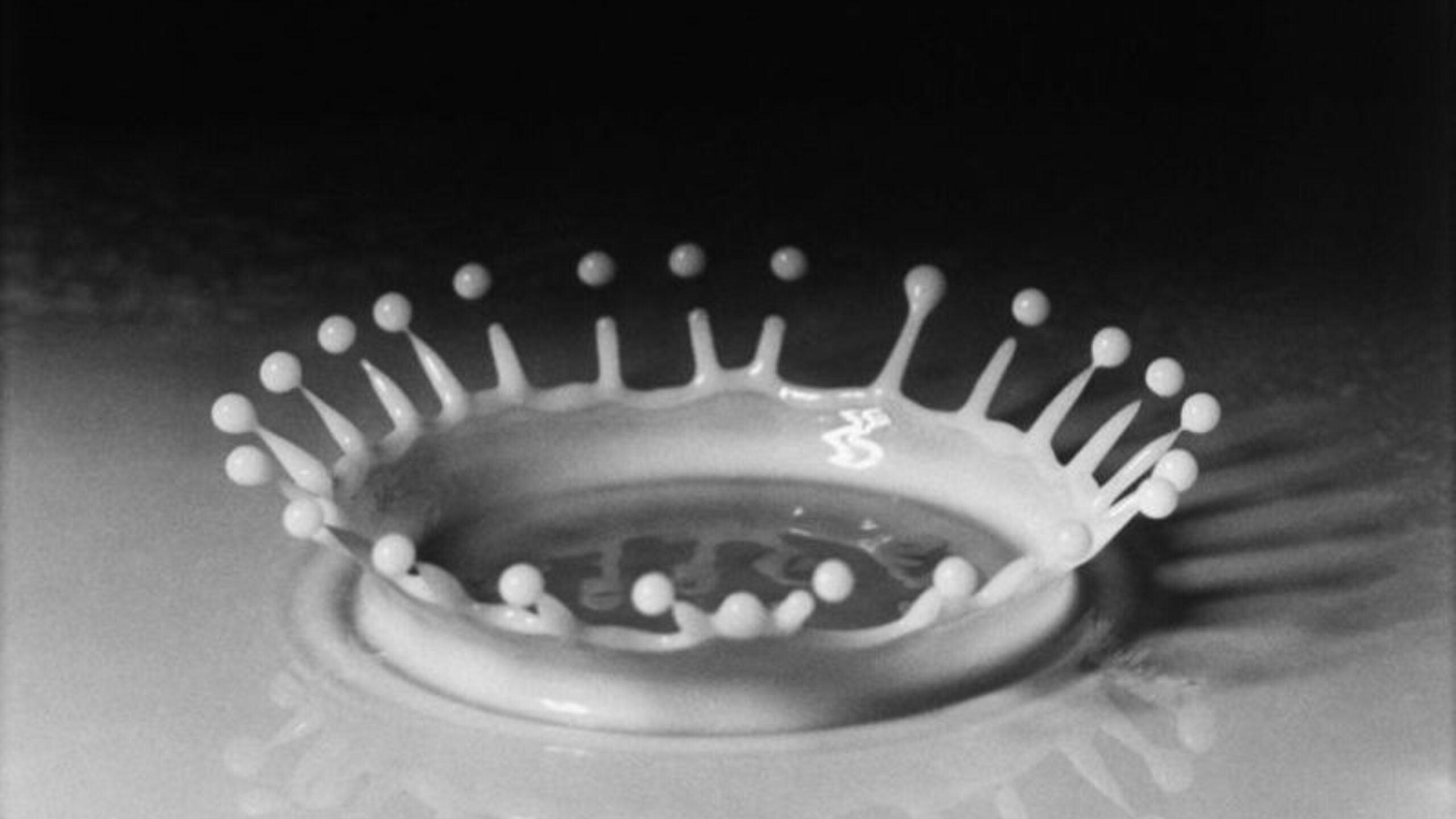

The scene is from Perfect storm, while it is not a one to one it is reminiscent because it show the splash and rise of the water before it eventually drops and crashes into itself. the bevelled edge in the movie shows how realistic movies try to become.
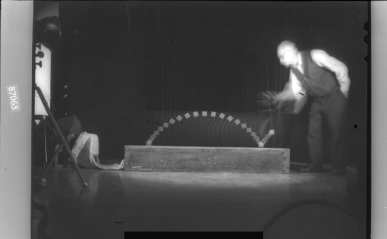
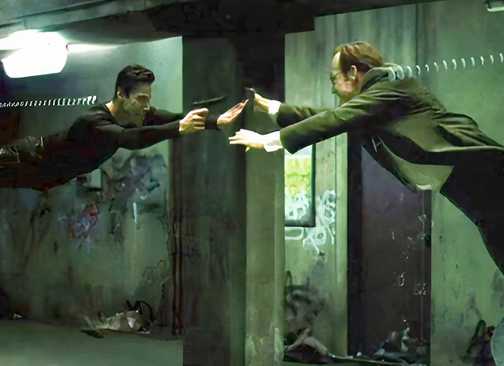
The representation of the bullets air path is very similar to the way that the path of bounce is show in the camera shot. The matrix is lowing down the bullet in a way that is reminiscent of the travel of the object in the still image.
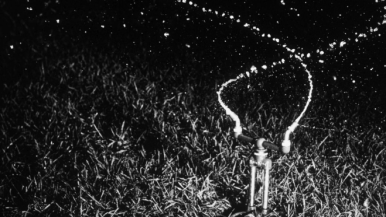

This is the shot from the xmen days of future past movie showing quicksilver slow down time around him. this show is highly similary to the sprinkles. by using the strobe light and camera you are able to see the water slow down and almost freeze in place viewing the split up water droplets during its motion.
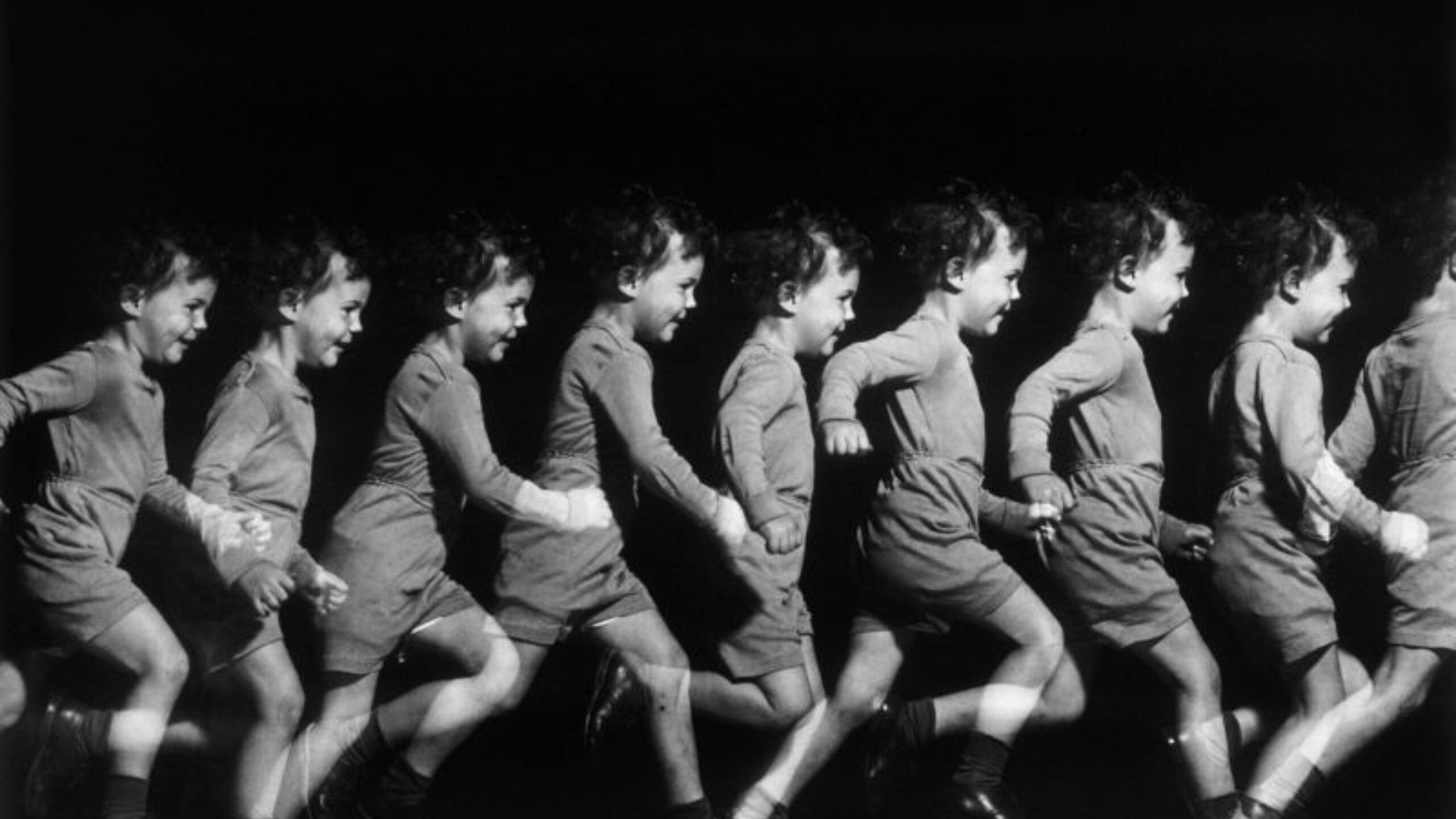

This is a shot from the matrix which shows one of the agents twisting and distorting its body allowing us the see multiple of it similar to how the running boy is captured multiple times within the single frame.
Written Post 1 *Week 1 Homework*
What does Dr James Fox mean by “The Age of the Image”?
My interpretation for “the age of the image” is the idea that images and pictures used to just be a creative pieces likes drawings and paintings and sometimes a historical depiction like old newspapers of an event like ww2 or even glimpses into the past of the cavemen’s scribbles on walls. However as times have changed and the mechanics of taking pictures have evolved so to has the usage and also the meaning behind pictures. they are no long theories and suggestions of what may have happened in the past like an image on a tomb wall, they are now also facts, proof, a statement that says this happened and i was there to take a snapshot of it.
That however leads us to our first issue, photos are and can be used as evidence they are essentially a freeze frame of the past allowing people to peer into that past but in an age of technology any one with the skill and a cunning mind can manipulate what is being seen. As spoken about in the video the photographer of 1917 in the western front took images and combine them to create new images that he couldn’t capture, such as ones during the fighting and aerial attacks.
Images can be used to show and tell but the can also be used to distort the truth and can easily be manipulated, in an age where there is an unprecedented amount of images taken or even rendered every single day, it becomes significantly harder to trust them. Images can do more than just reflect the world as we see it, they can shape our ideas and preconceptions about things we’ve never even see with our actual eyes.
I believe when James fox says “age of the image” he is talking about the presence of digital media in everyday life, how it can influence and affect us.
Week 2
Todays lecture is on the theory of the Photographic Truth Claim
Understand how visual effects (VFX) can blur the line between reality and illusion.
Analyse a VFX image for the following:
Indexicality: Are there traces of the real world, or is it fully fabricated?
Iconicity: Does it resemble reality convincingly, or is it clearly fictional?
Photographic Truth: Does it claim to represent reality, and how does this challenge traditional truth claims?
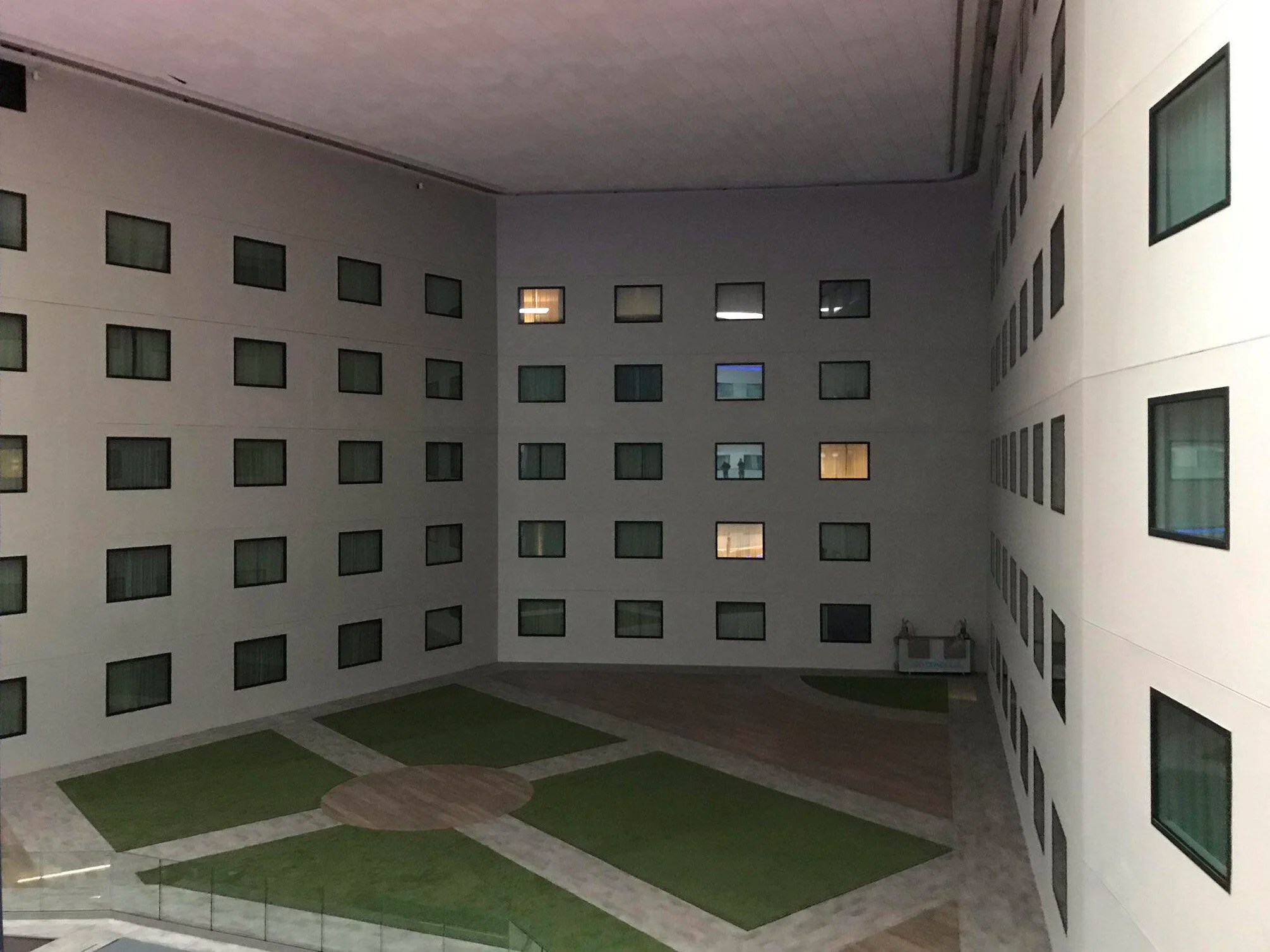
below is an image from online depicting something known as the backrooms, the concept of the backrooms is supposed to mirror some parts of the real where while being a sort of liminal space.
I chose this picture because even those it fake its at first glance is very hard to tell and it seems to be showing us familiar building despite not being buildings at all.
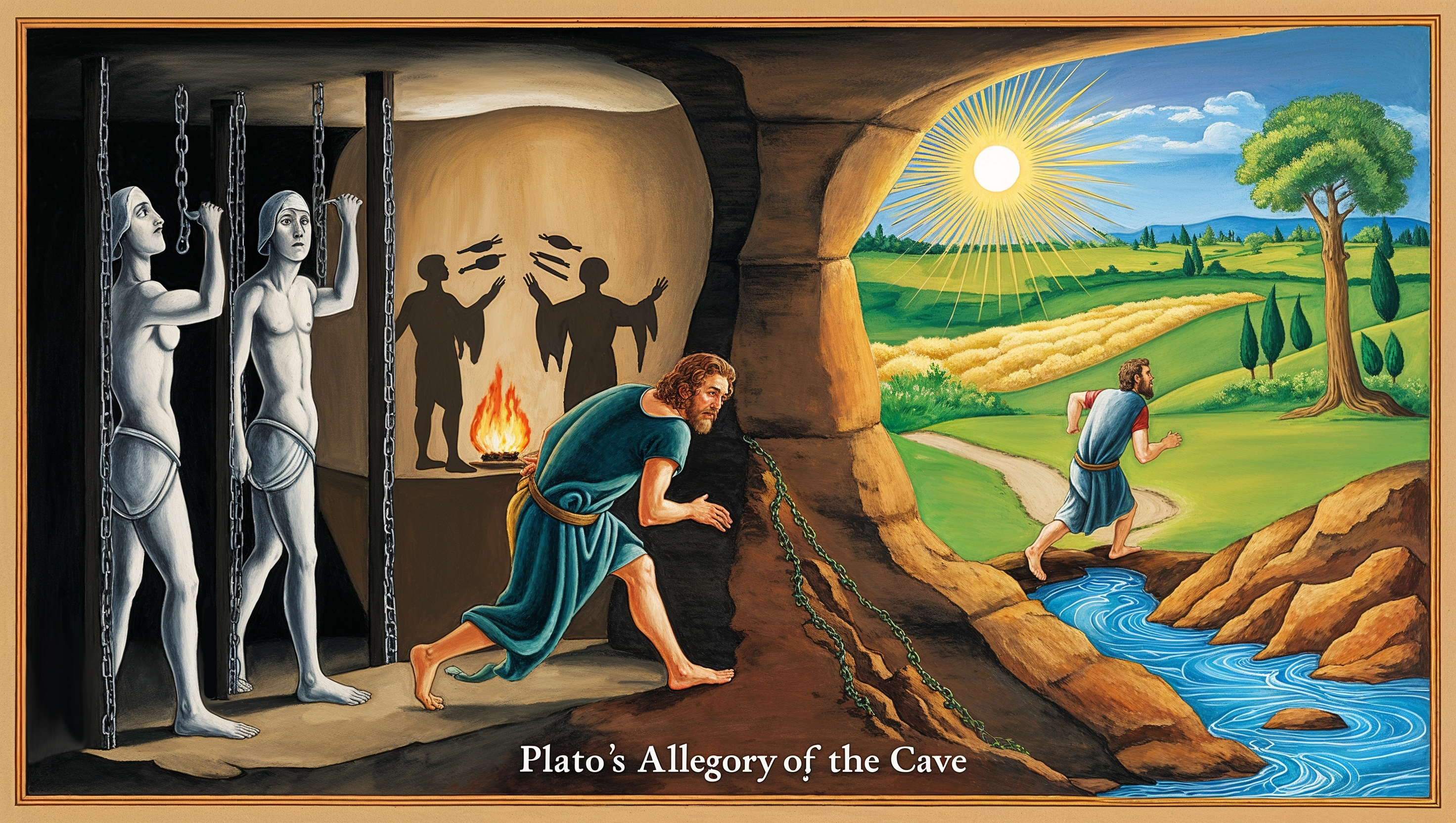
In around 100 words or fewer, please write a brief explanation of Plato’s cave.
You can include images or diagrams to help clarify your explanation.
Tips to guide your writing:
- What is the cave, and who are the prisoners?
- What do the shadows represent?
- What happens when one prisoner escapes?
- What does this story say about reality, perception, and knowledge?
You have 20 minutes to complete this in your digital sketchbook.

Plato’s allegory of the cave is the philosophical exploration of what’s real, why we think its real and how once we become enlightening we are so far removed from our previous self that more often than not trying to explain and persuade others to join us in enlightenment can be extremely challenging and those who are not enlightened may see you as crazy. in essence our world view, are understanding of life is so far removed that i personally think trying to talk is pointless.
Consolidate activity: On your digital sketchbooks please write a short post (around 200 words) on what you think is meant by the theory: The Photographic Truth-Claim?
- You can refer to the lecture notes and reading, or do your own searches on the topic.
- Outline and define what the truth-claim is.
- As an extra, you may also wish to add a reflective sentence or two on how visual effects uses the original photographic (or film) image. Where it is used and in what technical/software processes: Do these VFX processes somehow alter or make use the ‘truth’ of the image?
The photographic truth claim is the idea that photo supposedly are ought to be trusted as they show what “happened” and are essentially pieces of documentation that satisfy our brains need for validation.
My take on this is that the way in which we have used photos have ingrained itself on us so heavily that we have a bias to automatically assume what we see in them is real. Unlike paintings and draws we understand or one could say would like to believe that pictures taken with a camera are displaying the real world frozen in time. We all take mages of real events that happen to us, we all have images of things we have interacted with in the past, we have images of events we know for shure have in the past. This is what ties the ideas of pictures and truth together so well, unlike movies in which have actors we are aware of, captured in these images tend to be ourselves and loved ones. we know they happened in those images so why would we question other images.
VFX takes these images and uses software to change the the truth embedded in the image, manipulating the viewer. sometimes overtly for the sake of fun and entertainment and some times very discretely to manipulate and coerce you into not knowing the truth and seeing hwatever it is they want you to see. Gunning speaks on this topic and notes that the value attributed to a photos accuracy is based on a mix of indexicality and iconicity. which is the underling base for the truth claim itself. (Gunning, 2004) what i believe he is saying is that the more life like and image alongside the mental understand that the image was made by interacting with those items within the more we see the picture itself as evidence regardless of the idea that images can be manipulated.
Week 3
Faking Photographs, analogue image manipulation, digital computer collage: Creating an impression of reality
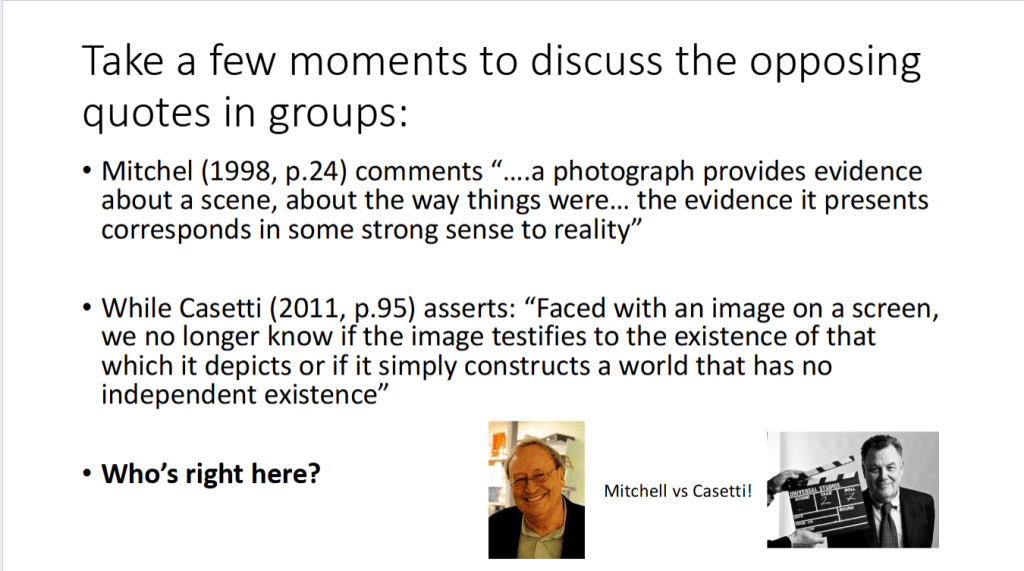
In my opinion both of them are correct, not only are photos evidence but they can be manipulated and are not ought to be automatically trusted. If i give you a camera taken photo you dont know if it actually is one nor do you know if its content is real however it can nonetheless be true that it is genuine and an actual snapshot of frozen time.
On your sketchbook page, collect four famous faked analogue photographs (non–digital) that were later proven to be fake

Famous Fake Photos: The Cottingley Fairies
1983, after the photos had been published in at least three journals and magazines, that the cousins admitted that the photos had been faked. They had copied photos of dancing girls from a popular children’s book, added wings, and secured them to the foliage around them with hatpins. After they took the fake photos, they disposed of their props in the creek.

A fake ghost scene taken by two brothers, circa 1900s-1910s.

Colin Evans, The Levitating Man
Evans would routinely host seances in large halls and request that the room be completely dark. As his believers gathered around him and chanted, there would suddenly be a flash. In the instant of blinding light, Colin Evans could supposedly be seen levitating.
Task 2: Faked Digital Photographs
In your digital sketchbook, collect four famous faked digital photographs (now
proven to be fake) that were manipulated using digital tools like Photoshop
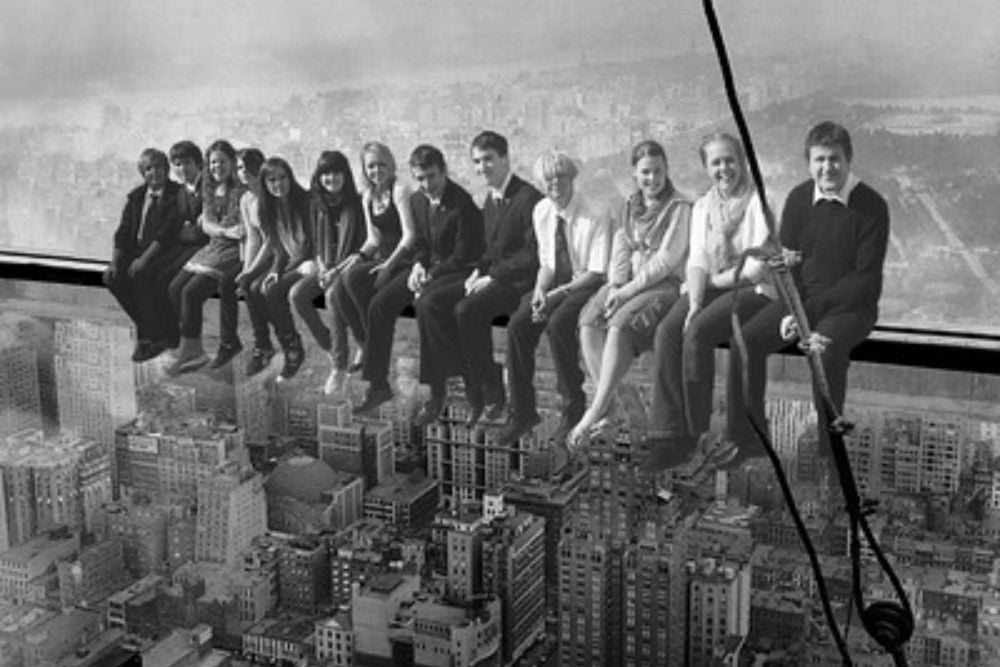
The iconic 1932 photograph showing construction workers casually eating lunch on a steel beam high above New York City seems like a candid glimpse of Depression-era life. In reality, the photo was one of a series of staged publicity shots ordered to promote the Rockefeller Center building project.
Other similarly staged photos from the same session showed workers tossing footballs or napping on beams. While the workers were genuine and the height was real, the seemingly spontaneous lunch break was carefully orchestrated.
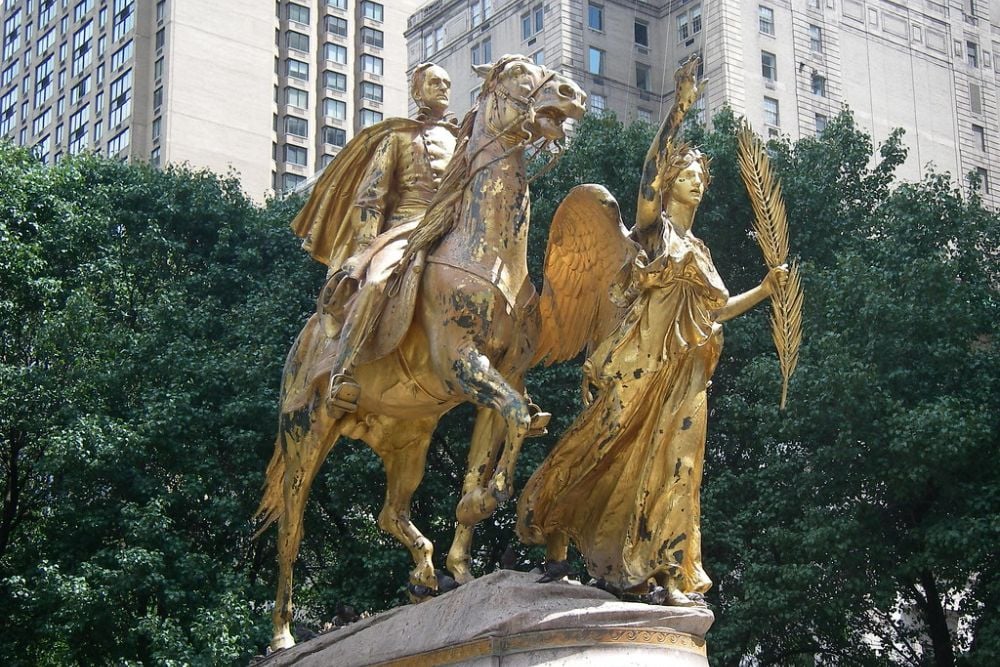
In a famous Civil War photograph by Mathew Brady showing General William Tecumseh Sherman with his generals, something isn’t quite right. General Francis P. Blair, standing far right in the group portrait, wasn’t actually present for that particular shot.
His image was taken from another photograph from the same session and added later. This early composite created the illusion of all the generals being together in one definitive group portrait.

After North Korean leader Kim Jong-il suffered a stroke in 2008, the government sought to project an image of his continued vitality. In November that year, North Korean state media published photos purportedly showing Kim standing with dozens of Korean soldiers.
(18 Historic Photos That Were Later Proven Fake)
Task 3: Faked Visual Effects Shots as “Documentary” Footage
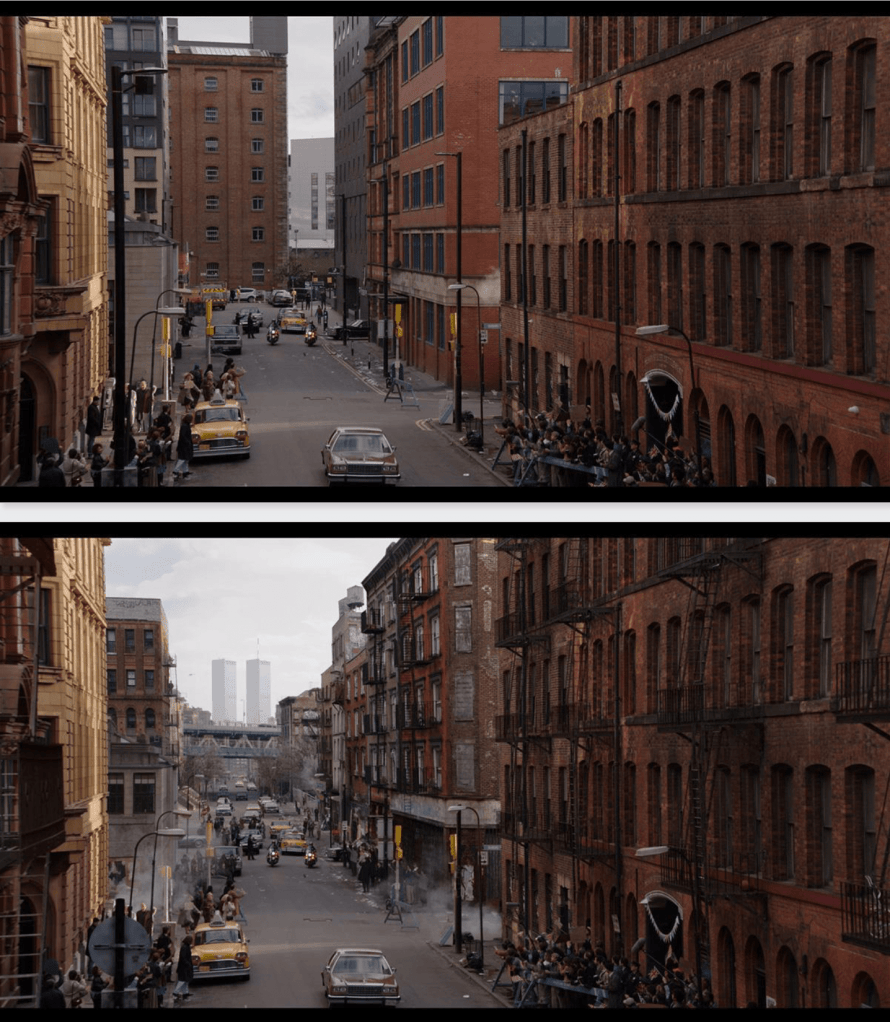
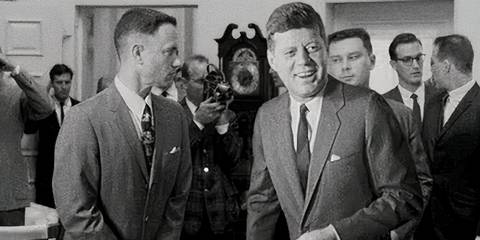
Write a definition of VFX compositing. What is it and how does it work?
Your post can be up to 350 words long. Check the lecture slides and references below to help you. Have a look at the chapter on Computer Collage in the book The Reconfigured Eye.
Consider the following points when you write your definition:
- Refer to published sources on compositing.
- Use your own experience to explain the purpose of digital compositing, its typical software applications, and the reasoning behind its development.
- Describe how compositing influences the audience’s perception of the image on screen.
- Identify the key components of a composite (e.g., VFX plates, CGI elements) and explain how they work together.
- Discuss the overall purpose of a composite in VFX. What does it create an impression of?
To begin i would like to say that vfx in the broadest way of defining it can be summed up as the combination of several visual assets to create a scene, image or shot that (at least the majority of the time) look as if they not only belong together but were actually shot together and are not indiviual pieces. This could range from simply adding rain to a scene that was otherwise dry due to the fact it would not have been practical to film in that scene in the rain, to taking green screen footage and compositing it into a live action scene. These are different types of reasons to composite but nonetheless are the basis of compositing.
I have used compositing when creating my james bond intro project, it allowed me to key out the green screen and import myself into a digital scene that did not exist in real life,software like after effects and nuke allow for compositing and varing levels of both quality and difficulty. A compositor can layer green screens, CGI and such to control what an audience sees and also to control the visibility of things and their quality, Porter and Duff speak (1984) speak about how important alphas are because they allow you to preserve edges and detail while being able to composite separately rendered assets.
Seprating shows allow also for changes to be made on the fly without having to rebuild the entire scene or re shoot to change somthing. if the lighting isnt good you can just use compositing softwares like houdini to simulate light for example. william J (1992) talks about the ability to cut, transform and blend photographed and synthetic imagery to create a specially made imagined reality in the book the recongfigured eye.
Beyond just the appearance of the composite is the psychological affects it has on those who view it. we begin to believe what we see, suspend our believes or sometimes not even question them at all. this leads audiences to fully embrace and engage in what it is being presented to them, making the world seem more believable. Tv shows like the crown that history woven in and real life events can often times be so well made that people forget that fictional side of a show and just assume all is real within it. The point of a Vfx shot is the to in my opinion create a spectatcle. something that grabs your attention, whether thats because of how photo realistic it is, whether its very accurately made compared to the original. A vfx shot can also be subtle and not get great attention while serving its job so well that no one would know or guess the scene was composited.
Week 4:
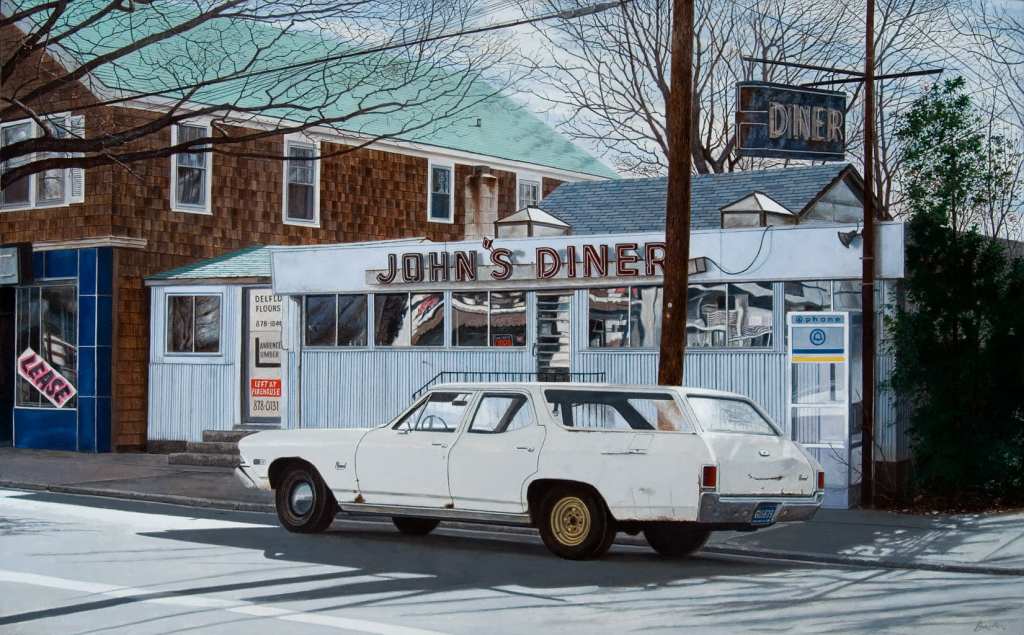
Photorealism in visual effects is the attempt to get real world likeness of an object or capture a life like perspective of something which makes you believe that a actual camera took a photo of it. Textures and colours appear accurate, the perfective and shape of the object or landscape match with the actual real counterpart. textures and details are as sharp or as soft as they would be in person. all of these features is what makes something photorealistic in my opinion.
Task 2 :
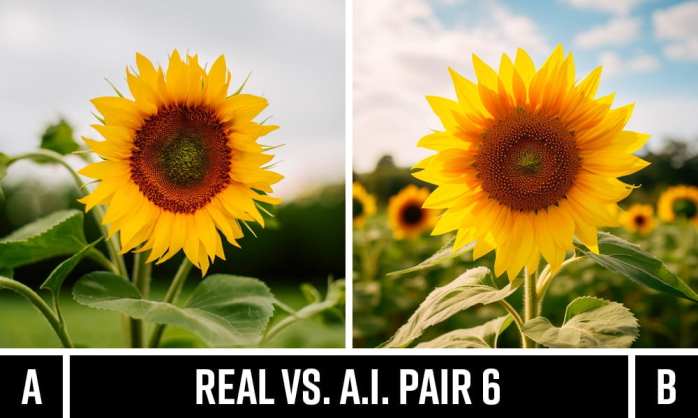
Find two VFX created images that you think are photorealistic, and also one that is clearly stylised. Be ready to explain what visual cues led you to that conclusion.
Stylised or Non-Photorealistic Visual Effects
This could be: VFX that intentionally look artistic, exaggerated, or cartoon-like (e.g., cel-shading, painterly styles, surreal lighting).
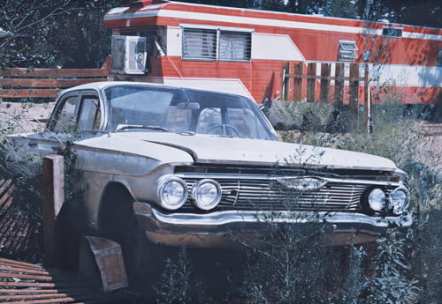
Two Photorealistic shots:
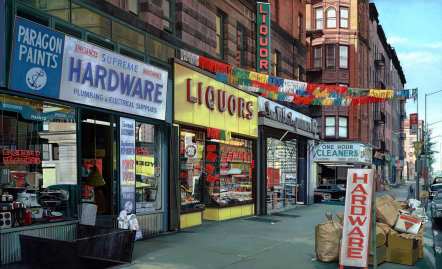
Stylised shot:

The first two are not actually photos but paintings however the attention detail, lighting and shading and colours would have you think otherwise at first glance and a second and even a third until you look closely at the small details. and i think that is what the essence of photo realism is. not to be perfect but to be very close in likeness still distinguishable but so close you say ”wow, theres no way” in comparison the stylised one is clearly drawn but it has elements of photo realism like reflections the light rays, the look of the hair but at a simple proper look you know its drawn, that is not what real hair looks like in photos nor does her skin even look real but we see that instead of a cartoon style hes gone for a more realistic depiction that doesnt quite get to photorealism.
Write a post on a type of Digital Photorealism
This week’s homework consolidate activity asks you to please write a written post on photorealism in VFX. In class, we looked at two dominant types or trends of photorealism in VFX.
Photorealism in Vfx compositing is the process of combining different assets like images, live action footage, computer generate elements so that they appear to have been shot together by a real camera. in my opinion the supposedly captured footage does not need to be extremely perfect one to one but does need to fit together in a way that can have the audience suspend their belief and engage with the content as if it were. There are many ways to achieve this such as through lighting, camera focus, motion blur. when these are out of balance they can look highly fake and obviusly not accurate. whether thats because its too sharp compared to the rest of the scene of washed out colours for example.
in the example of the lion king where simba is being held up we can tell it is computer generated but the attention to detail allows us to see it as realistic and photorealistic,The lion is clean and polished, but details such as its soft focus, lighting and textured fur help it resemble a camera image. to be more specific the fur has different lengths, the lighting hiting the side of his face while a darker more shadowy covers the fur hidden from the generated light source, the backround is not in focus allowing for his fur to not be sharp and look softer. speaking of fur his fur is highly realistic, all of their technical elements allow for audinces to feel like it could have been shot with a camera which is the whole idea behind photorealism, a combination of elements and assets that make you think it was shot with a real camera.
Week 5:
Digital indexicality
What types of capture are used in VFX and why?
What is this data? How is it captured? Where is it used?
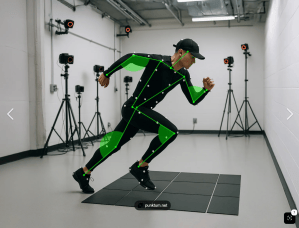
• Motion–Capture
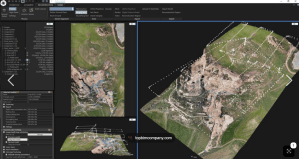
• Reality Capture (3D Scanning)
• [MOVEMENT] data
• [OBJECT] data
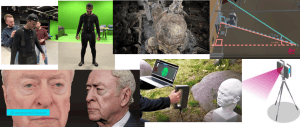
Task: Compare the movement and animation
in these animated features
Select scenes from The Jungle Book (1967) and The Jungle Book (2016).
• Identify how movement is created in each version—hand–drawn vs
digitally captured.
• Analyse: How do Baloo and Bagheera move differently across
versions?
• Is the motion stylised or realistic? How does that affect viewer
engagement?
• Which version feels more “alive” or expressive—and why?
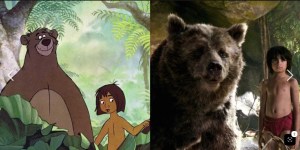
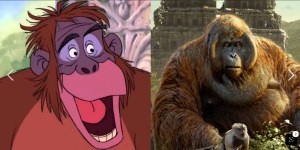
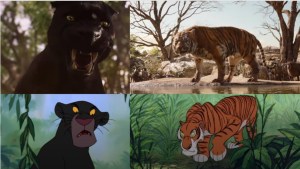
Rotoscoping and Photostats
• The process of “tracing” live–action frames revealed many insights
into human and animal movement for the Disney animators.
• They noticed that there was indeed many of the characteristics of the
12 principles hidden in the broken–down frames
From Roto to Photostats to Mo–Cap
• Motion capture is a process by which movement is recorded via
reflective points on the suit of an actor.
• Whilst Rotoscoping is two–dimensional, motion–capture is three–
dimensional
• Simply put, the movements of the actor are captured on a stage using
a set of special infrared cameras, the movement data is then
transferred to a Digital Character or Creature
• Specific markers on the mocap suit refer to joints on a digital skelton
SKETCHBOOK TASK: What do you think ? Find
examples
List what you think are the advantages and disadvantages of motion capture.
Pros and cons?
• When and for what character might use the traditional key–frame
technique?
• When and for what character might motion capture be used?
i think the advantage of motion capture is that you get a much easier pipeline, you’re able to act out exactly what you want and also then have the option to key frame and fix any things that do not fit or warp and do not fit your needs. where as with keyframe you are stuck going point by point, frame by frame its much long but in exchange you get a much more accurate and percise movement down to every last detail.
Please write an academic blog post comparing Motion Capture and Key Frame Animation.
In your post, consider the following:
- How do you think the two approaches or technologies are the same or different?
- Where do they align, and where do they not?
- Motion capture records and stores data from a real performance. What relationship do you think this data has to the original performer and event?
- How does motion capture bring elements of a real-world performance into a digital character or animation?
- How is this different from animation created entirely through key frames?
- What implications might these differences have for realism, authenticity, authorship, or audience perception?
Week 6: Topic: Reality Capture (LIDAR) and VFX
Task 1: Explore three significant types of 3D scanning used in VFX and document one real-world project example for each.
Your Task: Find one example project for each of the following scanning methods:
- Depth-Based Scanning
- Laser Scanning (LiDAR)
- Photogrammetry
For each scanning type: Find a real-world project online that uses the method
- Save one image from the project
- Upload the image to your sketchbook webpage
- Add a caption below each image: Project Title (bold or heading style) One-line description of what the project does
Your goal is to showcase one example project for each primary type of 3D scanning. For each, include an image and a short caption on your sketchbook page.
LiDAR:
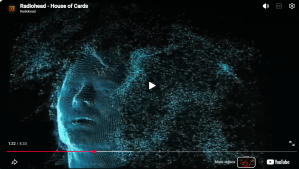
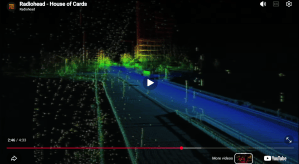
Radiohead’s music video ”house of cards” in 2008
LiDAR technology allowed people and environments to be scanned. the scanned enviroments were then taken and used as footage for the music video instead of traditional captured video.
Photogrammetry:
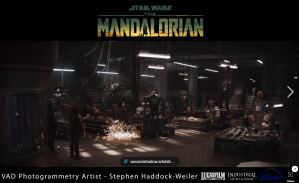
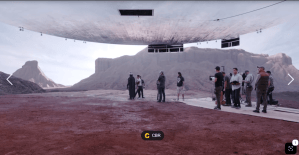
The Mandalorian 2019
ILM photographed real locations which helped to create digital environments for their stagecraft technology, which allowed them to use less green and blue screen which made post production a lot harder.
Depth based scanning:
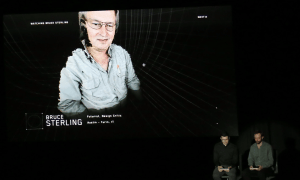
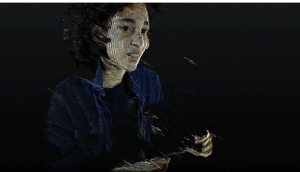
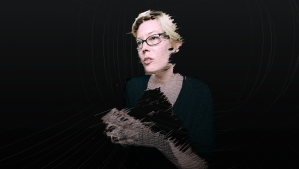
it was an interactive documentary that used depth scanning.
Find a LiDAR Scan Image
- Search online for a LiDAR scan of a landscape, building, or landmark
- Good sources: Sketchfab, ScanLAB Projects, architecture or science sites
- Add the Image to Your Sketchbook/Webpage
- Include a short title (e.g. “LiDAR Scan of the Eiffel Tower”)
- Add a 1–2 sentence reflection using the prompts below
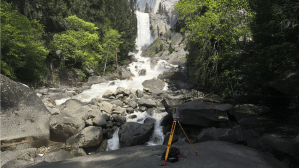
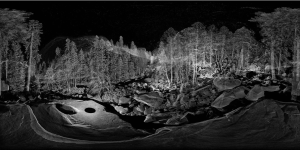
unlike a typical photo this scan records the space as measured points rather than light and points, so the colours and textures are lost but the data is kept and visually shown as point clouds. each point has its own 3d position so you can actually move through the captured data rather than just view it from a single fixed location.
a phot looks real to eye especially compared to this type of image due to colour, detail, textures. mean while the scan is spatially more accurate.

